The rainy season can be fun for dogs, but it can also be tough on their skin and coat. Wet walks, muddy paws, high humidity, and moisture trapped in the fur can create the perfect environment for bacteria, yeast, ticks, and other skin problems.
If your dog has been scratching more than usual, developing an unpleasant smell, licking their paws constantly, or showing redness after the monsoon, their skin may need some extra attention.
The good news is that a few simple post-monsoon dog care habits can help keep your pet clean, comfortable, and healthy.
In this guide, we’ll look at how to protect your dog’s skin and coat after the rainy season, including bathing, grooming, paw care, parasite prevention, nutrition, and warning signs that should be checked by a veterinarian.
Why Does the Monsoon Affect a Dog’s Skin and Coat?
Dogs naturally have a protective skin barrier, but prolonged exposure to moisture can disturb that balance. During and after the rainy season, humidity can remain high even when the weather starts to dry.
A wet coat that is not dried properly can trap moisture close to the skin. This may encourage the growth of bacteria and yeast.
Common post-monsoon skin concerns include:
- Itchy or irritated skin
- Redness and small rashes
- Hot spots
- Yeast or bacterial infections
- Excessive shedding
- Dry or flaky skin
- Unpleasant coat odor
- Paw irritation
- Fleas and ticks
Dogs with thick, long, or folded coats may need extra attention because moisture can remain trapped for longer.
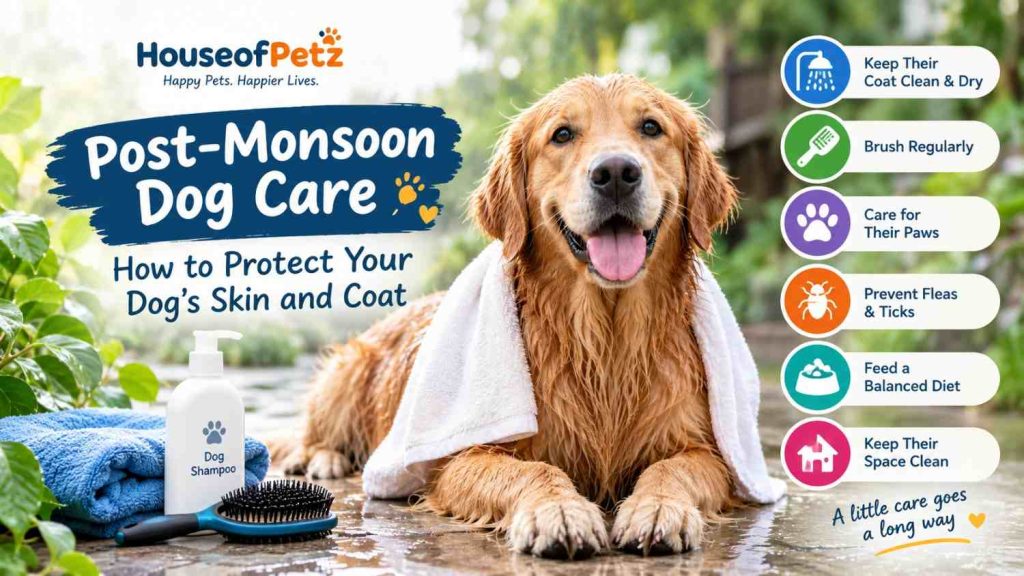
1. Keep Your Dog’s Coat Clean and Completely Dry
One of the most important post-monsoon dog care tips is simple: never leave your dog’s coat damp for long periods.
After a rainy walk, gently towel-dry your dog as soon as possible. Pay particular attention to areas where moisture can hide, including:
- Between the toes
- Under the belly
- Around the ears
- Armpits
- Groin area
- Under the collar
- Skin folds
For dogs with thick coats, towel drying may not be enough. A pet-safe dryer on a gentle, comfortable setting can help remove remaining moisture.
Avoid using very hot air because excessive heat can irritate the skin.
2. Brush Your Dog Regularly
Regular brushing is more than a way to make your dog look good. It can help maintain healthy skin and a clean coat.
Brushing removes loose hair, dirt, dead skin, and debris that may have collected during rainy walks. It can also help prevent mats and tangles, which can trap moisture against the skin.
The right brushing frequency depends on your dog’s coat type.
Short-haired dogs may need brushing a few times a week, while long-haired or double-coated dogs may benefit from more frequent grooming.
While brushing, take a moment to check the skin for unusual bumps, redness, scabs, parasites, or areas where your dog seems uncomfortable.
3. Give Your Dog Baths When Needed—Not Too Often
Bathing can help remove mud, dirt, and allergens from your dog’s coat, but over-bathing can remove natural oils from the skin.
Use a dog-specific shampoo recommended for your dog’s skin and coat needs. Human shampoo is generally not a good choice because dogs have different skin characteristics and products made for people may be too harsh.
After bathing:
- Rinse the shampoo thoroughly.
- Gently squeeze excess water from the coat.
- Towel-dry your dog.
- Make sure the undercoat is also dry.
- Brush the coat once it is appropriately dry.
If your dog has persistent itching, odor, sores, or inflammation, don’t simply increase bathing. A veterinarian can help determine the underlying cause.
4. Pay Special Attention to Your Dog’s Paws
Wet and muddy ground can be particularly hard on a dog’s paws.
After outdoor walks, inspect your dog’s paw pads and the spaces between the toes. Remove mud, grass, small stones, and other debris.
Look for:
- Redness
- Cracks
- Swelling
- Cuts
- Excessive licking
- A strong unusual odor
If your dog repeatedly licks or chews their paws, don’t assume it is simply a grooming habit. Persistent licking can be associated with allergies, irritation, infections, parasites, or other problems.
Keeping the paws clean and dry is an important part of monsoon and post-monsoon dog care.
5. Continue Flea and Tick Prevention
The end of the rainy season doesn’t necessarily mean the end of parasite problems.
Fleas and ticks can remain active in warm, humid conditions and may cause significant irritation. Ticks can also transmit diseases, making parasite prevention an important part of routine dog care.
Check your dog’s skin and coat regularly, especially around:
- Ears
- Neck
- Between the toes
- Under the legs
- Around the tail
- Belly
Use flea and tick prevention according to your veterinarian’s recommendations. Avoid applying random household insecticides or products that are not specifically designed for dogs.
6. Keep Your Dog’s Bedding Clean and Dry
Your dog’s skin care routine shouldn’t stop at the coat.
A damp or dirty bed can hold moisture, dirt, allergens, and microorganisms. Wash your dog’s bedding regularly and make sure it is completely dry before your pet uses it again.
Also clean frequently used items such as:
- Blankets
- Mats
- Towels
- Collars
- Harnesses
If your dog has experienced a skin infection, ask your veterinarian whether additional cleaning measures are appropriate.
7. Don’t Ignore Your Dog’s Diet
Healthy skin and a shiny coat start from the inside.
A balanced diet provides the protein, fats, vitamins, and minerals your dog needs to support normal skin and coat health.
Essential fatty acids, including omega-3 fatty acids, can play an important role in maintaining healthy skin. However, supplements are not automatically necessary for every dog.
Before adding fish oil or another supplement to your dog’s diet, discuss it with your veterinarian. The appropriate amount can depend on your dog’s size, age, diet, and overall health.
Make sure your dog also has access to fresh, clean drinking water throughout the day.
8. Keep the Home Environment Clean
Post-monsoon humidity can affect your dog’s indoor environment too.
Try to keep sleeping areas clean, dry, and well ventilated. Regularly vacuum areas where your dog spends a lot of time, particularly if your pet is sensitive to dust or environmental allergens.
If your home remains humid, improving ventilation or using appropriate moisture-control methods may help create a more comfortable environment.
9. Watch for Signs of Skin Problems
Some scratching is normal, but frequent or intense scratching shouldn’t be ignored.
Contact your veterinarian if you notice:
- Persistent itching
- Hair loss or bald patches
- Red or inflamed skin
- Repeated paw licking
- Open sores
- Scabs
- A strong or unusual skin odor
- Discharge
- Constant ear scratching
- Changes that are getting worse rather than better
These symptoms can have many possible causes, including allergies, parasites, bacterial or yeast infections, and other skin conditions.
Avoid trying multiple home remedies at once. Some products that seem harmless can actually irritate a dog’s skin further.
10. Schedule a Post-Monsoon Grooming Check
A grooming session after the rainy season can be a useful opportunity to inspect your dog’s overall coat and skin.
A professional groomer can help remove mats, clean difficult-to-reach areas, and identify visible changes that may need veterinary attention.
However, grooming is not a replacement for veterinary care. If your dog has a medical skin problem, a veterinarian should diagnose and treat it.
A Simple Post-Monsoon Dog Care Routine
You don’t need a complicated routine to protect your dog’s skin and coat.
Daily
- Check paws after outdoor walks.
- Dry your dog thoroughly if they get wet.
- Provide fresh drinking water.
- Look for unusual itching or licking.
A Few Times a Week
- Brush your dog’s coat according to their coat type.
- Check the skin for redness, bumps, or parasites.
- Wash or clean frequently used outdoor accessories.
Regularly
- Wash bedding and towels.
- Maintain flea and tick prevention.
- Bathe your dog when necessary.
- Schedule professional grooming when appropriate.
When Needed
- Contact your veterinarian if skin symptoms persist or worsen.
- Get advice before using medicated shampoos or supplements.
Frequently Asked Questions About Post-Monsoon Dog Care
How do I protect my dog’s skin after the monsoon?
Keep your dog clean and completely dry, brush the coat regularly, maintain flea and tick prevention, clean the paws after walks, and keep bedding dry. Monitor the skin for redness, itching, odor, or sores.
Can rainwater cause skin problems in dogs?
Rain itself isn’t necessarily harmful, but prolonged moisture, muddy environments, contaminated water, and damp fur can contribute to skin irritation and create conditions that allow certain microorganisms to grow.
How often should I bathe my dog after the rainy season?
There is no single bathing schedule for every dog. It depends on coat type, lifestyle, skin condition, and how dirty the dog becomes. Use a veterinarian-recommended dog shampoo and avoid unnecessary frequent bathing.
Why does my dog smell bad after getting wet?
A wet coat can make naturally occurring microorganisms on the skin more noticeable, producing a stronger odor. If the smell is persistent or accompanied by itching, redness, discharge, or hair loss, veterinary advice is recommended.
Should I shave my dog’s coat after the monsoon?
Not necessarily. Shaving is not automatically the best way to manage a wet or thick coat. The appropriate grooming approach depends on the dog’s breed, coat type, and individual needs. Speak with a professional groomer or veterinarian before making major changes to the coat.
Final Thoughts
The post-monsoon period is a good time to reset your dog’s grooming and wellness routine. Keeping the coat dry, brushing regularly, cleaning the paws, maintaining parasite prevention, washing bedding, and providing a balanced diet can all contribute to healthier skin and a cleaner coat.
Most importantly, pay attention to changes in your dog’s normal behavior and appearance. Persistent itching, unusual odor, hair loss, sores, or irritated skin shouldn’t be treated as a normal part of the rainy season.
With consistent post-monsoon dog care, you can help your furry companion stay comfortable, fresh, and ready to enjoy the seasons ahead.