Rainy weather brings relief from heat, but it can also create ideal conditions for mosquitoes. Standing water, damp areas, and increased humidity provide mosquitoes with places to breed. For dogs and cats, this can mean more exposure to mosquito bites around the home and during outdoor activities.
A mosquito bite may cause temporary itching and irritation. However, mosquitoes can also transmit certain parasites and diseases that may seriously affect pets. One of the best-known concerns in dogs is heartworm disease, which is spread through infected mosquitoes.
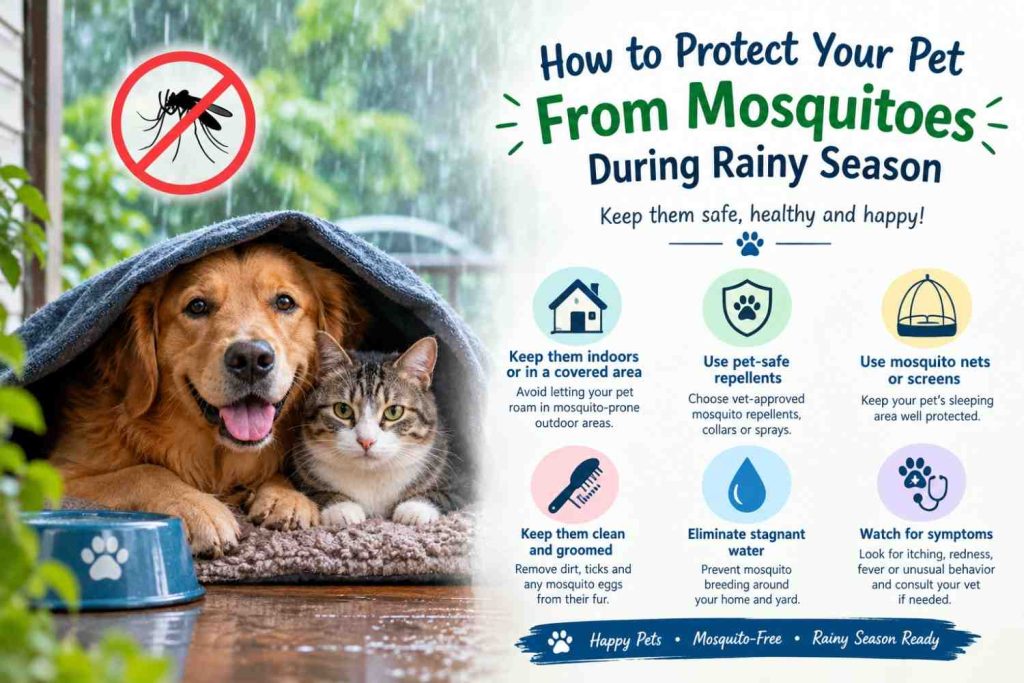
The good news is that pet owners can take several practical steps to reduce mosquito exposure during the rainy season. From removing standing water to discussing preventive care with your veterinarian, a consistent approach can help protect your pet.
Why Are Mosquitoes a Concern for Pets During the Rainy Season?
Mosquitoes need water to complete their breeding cycle. After rainfall, water can collect in flowerpots, buckets, plant trays, drains, discarded containers, and other small spaces around the house.
More mosquitoes can mean more opportunities for pets to be bitten.
For dogs, repeated exposure to infected mosquitoes is particularly concerning because mosquitoes can transmit heartworm larvae. Heartworm disease can damage the heart, lungs, and blood vessels and may become life-threatening if it is not prevented or treated appropriately.
Cats can also be affected by mosquito bites and mosquito-borne parasites. In some cases, a bite may cause localized skin irritation or an allergic reaction.
Therefore, mosquito control should be part of your pet’s rainy-season care routine.
1. Remove Standing Water Around Your Home
One of the simplest ways to reduce mosquitoes is to remove their breeding sites.
After rainfall, inspect your property for containers or areas where water has collected. Pay attention to:
- Plant pots and saucers
- Buckets and unused containers
- Pet water bowls left outdoors
- Children’s toys
- Old tires
- Open drains
- Tarps and plastic sheets
- Roof gutters
- Birdbaths
- Low areas where rainwater collects
Empty standing water regularly and clean containers thoroughly.
Remember that mosquitoes can breed in surprisingly small amounts of stagnant water. A quick inspection after heavy rain can therefore make a meaningful difference.
2. Keep Your Pet’s Outdoor Area Clean and Dry
Mosquitoes prefer damp, sheltered areas. Overgrown vegetation, piles of leaves, and clutter can provide places where mosquitoes rest.
Keep grass trimmed and remove accumulated leaves and organic debris. If your dog spends time in a kennel, balcony, garden, or outdoor enclosure, make sure the area has good drainage.
Your pet’s sleeping area should also remain dry and well ventilated.
Good yard maintenance does not eliminate mosquitoes completely, but it can help make the environment less attractive to them.
3. Use Mosquito Screens Indoors
Keeping mosquitoes outside is an important part of protection.
Check window and door screens for holes or gaps. Repair damaged screens and avoid leaving doors open for long periods, particularly during times when mosquito activity is high.
If your home has a balcony or partially enclosed area where your pet spends time, consider whether mosquitoes can easily enter that space.
Indoor protection is especially useful because pets may spend many hours resting inside the home.
4. Avoid Taking Your Pet Out During Peak Mosquito Activity
Mosquito activity can vary by species and location, but many mosquitoes are active during dawn and dusk.
If mosquitoes are particularly abundant in your area, consider adjusting your pet’s outdoor routine to reduce exposure during periods of high activity.
Instead of spending extended periods outdoors around sunrise or sunset, choose times when mosquito activity is lower when practical.
You should still provide your dog with appropriate exercise and outdoor time. The goal is to reduce unnecessary exposure rather than keep your pet indoors all the time.
5. Ask Your Veterinarian About Parasite Prevention
Environmental mosquito control is helpful, but it should not replace veterinary preventive care.
Ask your veterinarian which parasite-prevention products are appropriate for your pet. Depending on your pet’s species, age, weight, health status, lifestyle, and local disease risks, your veterinarian may recommend a specific preventive medication.
For dogs, heartworm prevention is particularly important in areas where heartworm transmission occurs.
Do not choose a medication simply because it is advertised for mosquito protection. Products designed for one species may be unsafe for another.
Never give a dog medication to a cat unless your veterinarian specifically tells you to do so.
Cats can be particularly sensitive to certain chemicals used in flea, tick, and insect-control products.
6. Never Apply Human Mosquito Repellent to Your Pet Without Veterinary Advice
A common mistake is assuming that a mosquito repellent that is safe for people is automatically safe for pets.
That is not necessarily true.
Human insect repellents can contain ingredients that may be harmful if applied to animals or accidentally swallowed during grooming. Cats are especially sensitive to some chemicals because of the way their bodies process certain substances.
Avoid applying human mosquito sprays, creams, or essential oils directly to your pet unless your veterinarian has confirmed that the specific product is safe and appropriate.
When mosquito control is necessary, use a pet-specific product according to veterinary guidance and the product label.
7. Be Careful With Essential Oils and Homemade Remedies
Natural does not always mean safe for animals.
Pet owners sometimes use essential oils such as tea tree, eucalyptus, peppermint, or citronella as homemade mosquito repellents. However, concentrated essential oils can cause problems when pets inhale, ingest, or absorb them through the skin.
Cats are particularly vulnerable to toxicity from certain essential oils.
For this reason, avoid experimenting with concentrated oils or homemade repellents on your pet. If you are considering a natural mosquito-control approach, discuss it with your veterinarian first.
8. Keep Pet Water Bowls Fresh
Your pet needs constant access to clean drinking water, especially during warm and humid weather. However, outdoor water containers can potentially become mosquito breeding sites if water is left undisturbed for extended periods.
Change outdoor water frequently and wash the bowl regularly.
Whenever possible, keep your pet’s main water supply in a clean, sheltered location. Do not reduce your pet’s access to water as a way of controlling mosquitoes.
Instead, focus on keeping the water fresh and preventing unused containers from collecting stagnant water.
9. Watch for Signs of Mosquito Bites or Skin Irritation
A mosquito bite may cause a small, itchy bump. Some pets may scratch, lick, or chew the affected area.
Watch for:
- Persistent scratching
- Redness or swelling
- Small raised bumps
- Excessive licking
- Hair loss around irritated areas
- Scabs or sores
- Repeated skin irritation
If your pet develops significant swelling, widespread skin irritation, breathing difficulties, weakness, or other unusual symptoms, contact a veterinarian promptly.
Do not assume that every skin problem is caused by mosquitoes. Fleas, ticks, allergies, mites, infections, and other conditions can produce similar symptoms.
10. Know the Warning Signs of Heartworm Disease
Heartworm disease can develop gradually, so prevention is much more important than waiting for obvious symptoms.
In dogs, possible signs of established heartworm disease can include:
- Persistent cough
- Reduced exercise tolerance
- Tiredness
- Difficulty breathing
- Weight loss
- Decreased appetite
- Abdominal swelling in advanced cases
Some infected dogs may show few obvious signs during the early stages.
Cats can also develop serious complications from heartworm infection, and diagnosis can be more challenging.
If your pet has missed parasite prevention, has unknown preventive history, or lives in an area where heartworm is a concern, speak with your veterinarian about appropriate testing and prevention.
Create a Simple Rainy-Season Mosquito Checklist
A consistent routine makes mosquito control easier.
Every day
- Check outdoor areas for newly collected rainwater.
- Keep your pet’s water bowl clean and fresh.
- Check your pet for unusual itching or skin irritation.
- Keep doors and windows closed or screened where practical.
Every few days
- Inspect plant trays, buckets, drains, and containers.
- Remove leaves and debris from outdoor areas.
- Check your pet’s sleeping area for dampness.
Regularly
- Maintain your garden and drainage.
- Inspect window and door screens.
- Follow your veterinarian’s parasite-prevention schedule.
- Discuss any unusual symptoms with your veterinarian.
Final Thoughts
Mosquitoes are a normal part of rainy-season life, but pet owners can reduce their pets’ exposure with a few simple habits. Removing standing water, maintaining clean outdoor spaces, using screens, limiting unnecessary exposure during peak mosquito activity, and following veterinary parasite-prevention recommendations can all contribute to better protection.
Most importantly, avoid using human insect repellents or unverified homemade treatments on pets. Dogs and cats can react differently to chemicals, and a product that is suitable for people may not be safe for animals.
If you are unsure which mosquito or parasite prevention is appropriate for your pet, consult your veterinarian. A prevention plan based on your pet’s species, lifestyle, age, health, and local risks is the safest approach.
With regular environmental control and responsible preventive care, you can help your pet enjoy the rainy season more safely and comfortably.