
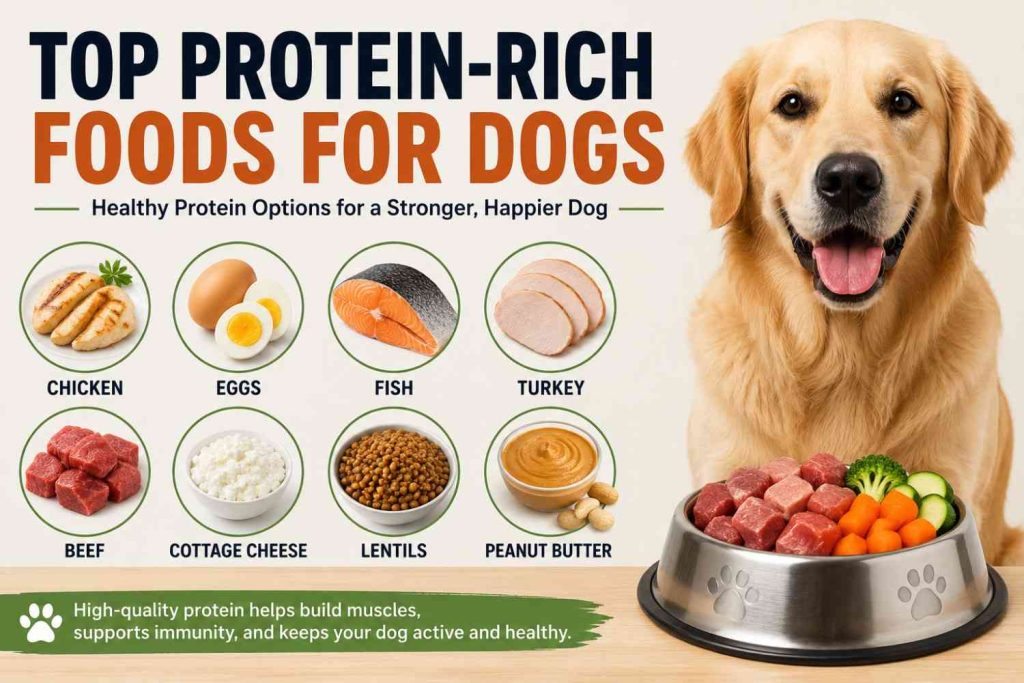
Protein is one of the most essential nutrients in a dog’s diet. It supports muscle growth, repairs tissues, strengthens the immune system, and keeps your dog active and healthy. Choosing the right protein-rich foods can significantly improve your dog’s overall well-being.
In this guide, we’ll explore the best protein-rich foods for dogs, their benefits, and how to safely include them in your pet’s daily diet.
Why Protein is Important for Dogs
Protein is made up of amino acids, which are the building blocks of your dog’s body. It plays a key role in:
- Muscle development and repair
- Healthy skin and shiny coat
- Hormone and enzyme production
- Strong immune system
Dogs need high-quality protein regularly, especially puppies, active breeds, and pregnant dogs.
1. Chicken – Lean and Easily Digestible
Chicken is one of the most popular protein sources for dogs due to its high nutritional value and easy digestibility.
Benefits:
- Rich in lean protein
- Supports muscle growth
- Gentle on the stomach
Feeding Tips:
Serve boiled or grilled chicken without salt, spices, or oil. Always remove bones.
2. Eggs – Complete Protein Source
Eggs are considered one of the best protein sources because they contain all essential amino acids.
Benefits:
- Highly digestible
- Packed with vitamins and minerals
- Supports healthy skin and coat
Feeding Tips:
Always serve cooked eggs. Avoid raw eggs due to bacterial risks.
3. Fish – Protein with Omega-3 Fatty Acids
Fish such as salmon and sardines provide high-quality protein along with healthy fats.
Benefits:
- Supports brain and joint health
- Reduces inflammation
- Promotes shiny coat
Feeding Tips:
Serve cooked, deboned fish without seasoning.
4. Turkey – Low-Fat Protein Option
Turkey is an excellent alternative for dogs that may be sensitive to chicken.
Benefits:
- Low in fat
- Easy to digest
- Supports weight management
Feeding Tips:
Feed plain cooked turkey without skin or seasoning.
5. Beef – Nutrient-Dense Protein
Beef is a rich source of protein and essential nutrients like iron and zinc.
Benefits:
- Boosts energy levels
- Supports muscle development
- Highly palatable for dogs
Feeding Tips:
Use lean cuts and cook thoroughly. Avoid fatty portions.
6. Cottage Cheese – Light and Digestible
Cottage cheese is a great option for dogs with sensitive stomachs.
Benefits:
- Easy to digest
- Contains calcium and protein
- Supports gut health
Feeding Tips:
Serve in small amounts and choose low-fat varieties.
7. Lentils – Plant-Based Protein
Lentils are a good plant-based protein option when used in moderation.
Benefits:
- High in fiber
- Supports digestion
- Affordable and nutritious
Feeding Tips:
Cook thoroughly and avoid adding salt or spices.
8. Peanut Butter – Protein Treat
Peanut butter is a favorite treat for dogs and contains protein and healthy fats.
Benefits:
- High-energy snack
- Great for training rewards
Feeding Tips:
Use only xylitol-free peanut butter and feed in moderation.
How Much Protein Does Your Dog Need?
Protein requirements depend on your dog’s age, size, and activity level:
- Puppies need higher protein for growth
- Active dogs require more protein for energy
- Senior dogs need balanced protein for maintenance
Always consult your veterinarian before making major dietary changes.
Final Thoughts
Providing your dog with high-quality protein is essential for their health and happiness. Including a mix of animal-based and plant-based protein sources ensures balanced nutrition.
Remember, proper preparation, portion control, and variety are key to maintaining a healthy diet for your dog. A well-fed dog is more energetic, healthier, and lives a longer, happier life.