Just like humans, dogs experience changes in their bodies with shifting seasons. Temperature, activity levels, and even mood can influence how much your dog eats and what nutrients they need. Yet, many pet owners overlook one important factor—adjusting their dog’s diet based on the season.
In this guide, you’ll learn how seasonal diet changes affect dogs, what to feed during each season, and how to keep your furry friend healthy all year round.
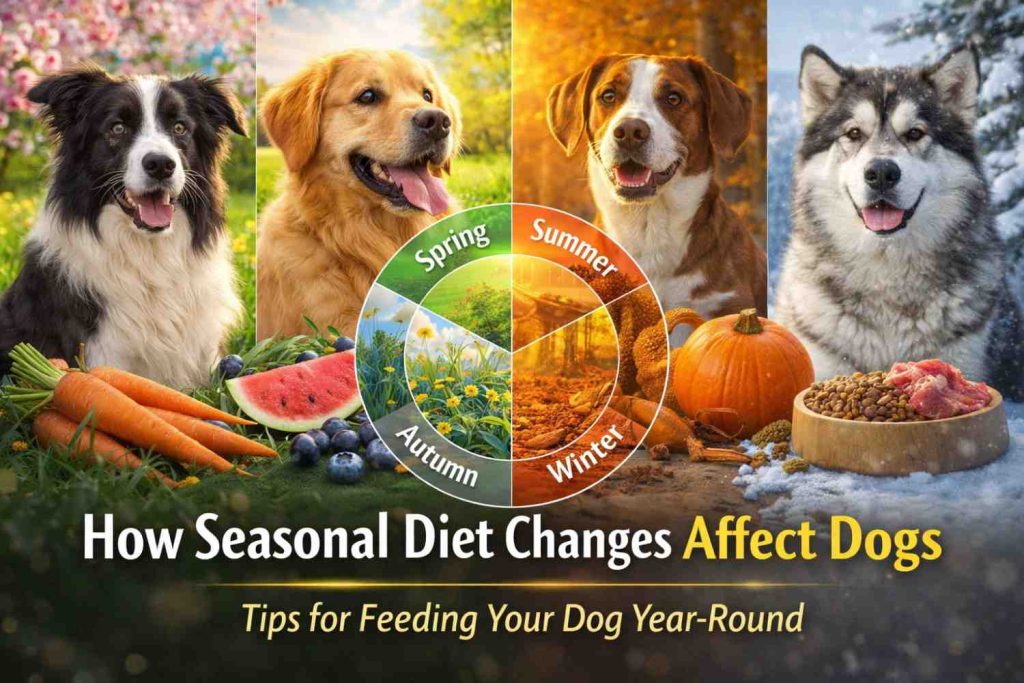
🐶 Why Seasonal Diet Changes Matter for Dogs
Dogs are sensitive to environmental changes. Their metabolism, hydration needs, and energy levels can vary depending on the weather. Feeding the same diet year-round without adjustments may lead to:
- Weight gain or loss
- Dehydration
- Low energy levels
- Digestive issues
- Weakened immunity
By adapting your dog’s diet to the season, you support their overall health and comfort.
🌸 Spring Diet for Dogs: Detox and Renewal
Spring is a time of renewal, and your dog’s body may naturally shift after winter.
Key Changes:
- Increased activity levels
- Shedding season begins
- Mild weather improves appetite
Diet Tips:
- Add fresh vegetables like carrots and green beans
- Include omega-3 fatty acids for a healthy coat
- Lighten calorie intake if your dog was less active in winter
- Introduce probiotics to support digestion
What to Watch:
Allergies are common in spring. If your dog shows itching or digestive upset, review their diet and consult a vet if needed.
☀️ Summer Diet for Dogs: Hydration is Key
Summer heat can significantly impact your dog’s eating habits. Many dogs eat less during hot weather but need more hydration.
Key Changes:
- Reduced appetite
- Increased water loss
- Risk of heatstroke
Diet Tips:
- Provide high-moisture foods (wet food or broth)
- Add fruits like watermelon (seedless) in moderation
- Feed smaller, more frequent meals
- Avoid heavy, fatty foods
Hydration Boosters:
- Fresh water at all times
- Homemade dog-safe electrolyte solutions
- Ice cubes or frozen treats
What to Watch:
Dehydration signs include dry gums, lethargy, and excessive panting. Adjust diet quickly if these appear.
🍂 Autumn Diet for Dogs: Building Strength
Autumn is a transition period where dogs prepare for colder months.
Key Changes:
- Appetite may increase
- Activity levels stabilize
- Coat thickening begins
Diet Tips:
- Gradually increase protein intake
- Add healthy fats for energy
- Include seasonal vegetables like pumpkin
- Support joint health with supplements if needed
Why Pumpkin?
Pumpkin is rich in fiber and helps regulate digestion, making it ideal during seasonal transitions.
❄️ Winter Diet for Dogs: Energy and Warmth
Cold weather requires more energy, especially for outdoor or active dogs.
Key Changes:
- Higher calorie needs
- Slower metabolism in less active dogs
- Dry skin and coat issues
Diet Tips:
- Increase calorie intake for active dogs
- Add healthy fats like fish oil
- Provide warm meals instead of cold food
- Ensure proper hydration (dogs may drink less in winter)
What to Watch:
Indoor dogs may gain weight due to reduced activity. Monitor portion sizes carefully.
🦴 How Activity Levels Affect Seasonal Diet
Your dog’s activity level plays a major role in dietary needs.
- More active in cooler weather → Higher calories needed
- Less active in extreme heat or cold → Lower calorie intake
- Working or outdoor dogs → Require consistent energy support
Adjust portion sizes based on daily exercise, not just the season.
🐕 Signs Your Dog Needs a Diet Change
Watch for these signals that your dog’s diet may need adjustment:
- Sudden weight gain or loss
- Changes in appetite
- Low energy or hyperactivity
- Dull coat or excessive shedding
- Digestive issues like diarrhea or constipation
These signs often appear when seasonal needs are not met.
🍖 Best Foods for Seasonal Balance
Here are some versatile foods you can include year-round with seasonal adjustments:
- Lean proteins (chicken, turkey, fish)
- Whole grains (rice, oats)
- Vegetables (carrots, spinach, pumpkin)
- Healthy fats (fish oil, flaxseed)
- Fruits (apple slices, blueberries)
Always introduce new foods gradually to avoid stomach upset.
⚠️ Common Mistakes Pet Owners Make
Avoid these common errors when adjusting your dog’s diet:
- Making sudden diet changes
- Overfeeding during winter
- Ignoring hydration in summer
- Feeding seasonal human foods without checking safety
- Not consulting a vet for special dietary needs
Consistency and balance are key.
🏡 Tips to Transition Your Dog’s Diet Safely
When changing your dog’s diet for a new season:
- Do it gradually over 7–10 days
- Mix old and new food in increasing proportions
- Monitor digestion and behavior
- Keep portion sizes appropriate
- Consult a vet if your dog has health conditions
❤️ Final Thoughts
Seasonal diet changes are essential for keeping your dog healthy, active, and comfortable throughout the year. By understanding how weather affects your dog’s body, you can provide the right nutrition at the right time.
Small adjustments—like increasing hydration in summer or adding healthy fats in winter—can make a big difference in your dog’s overall well-being.
Pay attention to your dog’s behavior, appetite, and energy levels. They often tell you exactly what they need—you just have to listen.