
For generations, pet owners have relied on instinct to understand their furry companions. A wagging tail often means happiness, flattened ears can signal fear, and persistent barking may point to stress or excitement. But as technology advances, many companies are now claiming that artificial intelligence (AI) can do more than humans when it comes to interpreting pet emotions. From smart collars and AI-powered cameras to bark translators and emotion-detection apps, the pet tech industry is growing rapidly.
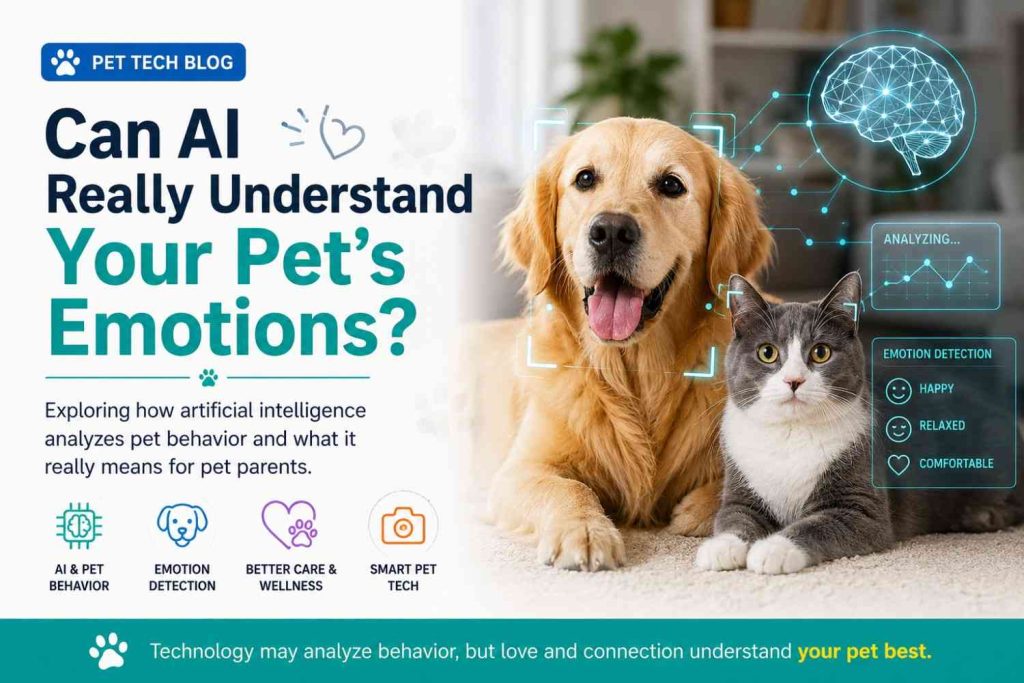
This raises an interesting question: can AI truly understand your pet’s emotions, or is it simply analyzing patterns and behaviors?
The answer is more complicated than a simple yes or no.
The Rise of AI in Pet Care
Artificial intelligence has become part of everyday life. We use it in smartphones, healthcare, navigation, online shopping, and even home security systems. Naturally, the pet industry has started adopting AI technology as well.
Today, pet owners can buy devices that monitor activity levels, track sleep patterns, detect unusual barking, and even alert owners when a pet appears anxious or sick. Some smart cameras claim to recognize facial expressions and body language, while certain apps promise to “translate” dog barks or cat meows into emotional states.
These technologies are designed to help pet owners better understand their animals, especially when they are away from home for long hours.
The demand for these products is growing because modern pet owners increasingly view pets as family members. People want deeper connections with their animals and are willing to invest in tools that improve health, safety, and emotional well-being.
How AI Analyzes Pet Behavior
AI does not understand emotions the same way humans do. Instead, it studies large amounts of data and identifies patterns.
For example, an AI-powered pet camera may analyze:
- Tail movement
- Ear position
- Vocal sounds
- Activity levels
- Facial expressions
- Sleeping habits
- Eating behavior
By comparing this information with thousands of similar examples, the system predicts what emotion the pet may be experiencing.
If a dog is pacing repeatedly, whining, and staying near the door, the AI may identify signs of separation anxiety. If a cat suddenly becomes inactive and hides more often, the system might flag possible stress or illness.
The technology relies heavily on machine learning, meaning the more data it collects, the more accurate its predictions may become over time.
Can AI Detect Happiness and Stress?
In some situations, AI can successfully recognize basic emotional patterns.
Researchers have discovered that dogs display consistent physical signals when feeling happy, fearful, relaxed, or anxious. AI systems trained on these signals can sometimes identify emotional states with surprising accuracy.
For example:
- A relaxed posture and playful movement may indicate comfort or excitement.
- Excessive barking combined with rapid pacing may suggest stress.
- Reduced movement and unusual sleep habits could signal illness or sadness.
Smart collars can also monitor heart rate, temperature, and physical activity. Sudden changes may help detect emotional distress or health issues before they become serious.
Some pet owners already use AI devices to monitor pets while at work. These systems can send alerts if unusual behavior occurs, allowing owners to check in remotely or contact a veterinarian when needed.
While this technology can be useful, it is important to remember that AI is identifying behavioral patterns, not “reading minds.”
The Limits of AI Understanding
Despite impressive advancements, AI still faces major limitations when it comes to understanding animals.
Human emotions are already difficult to interpret accurately, even among people. Animals communicate differently depending on breed, personality, environment, past experiences, and health conditions.
For instance, a dog wagging its tail is not always happy. Some dogs wag when nervous or overstimulated. Similarly, cats may purr when relaxed but also when frightened or in pain.
AI systems may misinterpret these signals if they rely too heavily on generalized data.
Another challenge is individuality. Every pet behaves differently. One dog may bark loudly when excited, while another remains silent. Some cats naturally hide during the day, while others constantly seek attention.
Because of these differences, AI cannot fully replace human observation and emotional connection.
Are “Pet Translation” Apps Accurate?
One of the most talked-about areas of pet AI involves apps claiming to translate barks or meows into human language.
While these apps are entertaining, most experts remain skeptical about their scientific accuracy.
Dogs and cats do communicate through vocal sounds, but their communication is highly context-dependent. A bark can mean excitement, warning, fear, frustration, or a desire for attention depending on the situation.
Current AI technology can categorize sounds into broad emotional groups, but it cannot provide exact translations like:
“I’m hungry”
“I want to go outside”
“I’m angry at the mailman”
These apps are better viewed as fun tools rather than precise communication devices.
However, the research behind them may still contribute to future advancements in animal behavior science.
AI and Pet Health Monitoring
One area where AI is showing significant promise is health monitoring.
Changes in emotional behavior often appear before physical symptoms become obvious. AI-powered devices can continuously monitor pets and detect subtle changes that owners may miss.
For example, AI may identify:
- Reduced movement
- Changes in appetite
- Increased scratching
- Irregular sleep patterns
- Excessive licking
- Signs of pain or discomfort
Early detection can help owners seek veterinary care sooner, potentially improving outcomes for many conditions.
Some veterinary clinics are also beginning to use AI-assisted diagnostic tools to analyze medical scans, monitor recovery, and predict health risks.
In this sense, AI is becoming a valuable support system rather than a replacement for veterinarians or pet owners.
Emotional Bonds Still Matter Most
No matter how advanced technology becomes, emotional understanding between humans and pets still depends heavily on real-world interaction.
Pets build trust through daily routines, tone of voice, touch, eye contact, and companionship. Owners who spend time with their animals often recognize emotional changes faster than any algorithm.
AI may help identify patterns, but it cannot fully understand the emotional history shared between a pet and its owner.
A dog may act differently after losing a companion animal, moving to a new home, or sensing stress within the family. These emotional experiences are deeply personal and difficult for technology to measure accurately.
The strongest pet relationships are built on attention, patience, and consistent care—not just data analysis.
The Future of AI in Understanding Pets
AI technology will likely become more advanced in the coming years. Researchers are already exploring ways to improve emotion recognition through facial analysis, vocal interpretation, biometric tracking, and behavioral modeling.
Future devices may provide more personalized insights based on individual pet habits rather than generalized breed data.
We may eventually see AI systems capable of recognizing emotional trends with much greater precision. This could improve pet healthcare, training, anxiety management, and overall well-being.
However, experts agree that AI should be viewed as a helpful tool rather than a complete solution.
Technology can support pet owners, but it cannot replace empathy, experience, and genuine human connection.
Final Thoughts
So, can AI really understand your pet’s emotions?
To some extent, yes. AI can analyze behavior, recognize patterns, and detect possible emotional states based on data. It can help monitor stress, identify unusual activity, and support better pet care.
But true emotional understanding is far more complex.
Pets are individuals with unique personalities, experiences, and ways of communicating. While AI may become increasingly accurate over time, it still lacks the emotional intuition and bond that humans naturally develop with their animals.
The future of pet care will likely combine both worlds: advanced technology and compassionate human attention.
For pet owners, the best approach is to use AI as a supportive tool while continuing to spend quality time observing, understanding, and caring for their beloved companions.