Christmas is a time for delicious food, family gatherings, and sharing special moments with the people we love. If you have a dog at home, you have probably noticed those hopeful eyes watching every plate that passes by. It is tempting to share a little of your Christmas dinner, especially when your dog seems eager to join the celebration.
However, not every festive food is suitable for dogs. Some ingredients commonly found in Christmas meals can cause digestive problems, while others can be poisonous even in small amounts.
The good news is that your dog can still enjoy a special holiday treat. The key is knowing which foods are safe, which should be avoided, and how to make Christmas celebrations enjoyable for your four-legged family member.
In this guide, we explain which Christmas foods dogs can eat, which festive favourites are dangerous, and how to keep your pet safe throughout the holiday season.
Can Dogs Eat Christmas Dinner?
Yes, dogs can enjoy small portions of certain Christmas dinner ingredients, provided they are prepared plainly and do not contain harmful seasonings, sauces, or other unsafe ingredients.
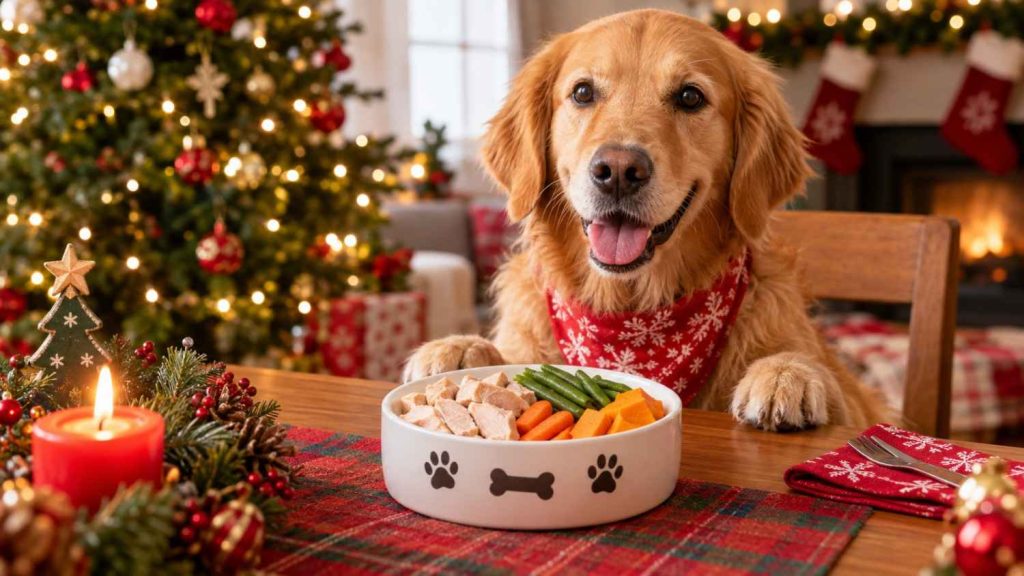
Plain, fully cooked turkey without bones or skin is one option. Small amounts of plain vegetables, such as green beans or carrots, may also be suitable for many dogs.
However, traditional Christmas meals often contain butter, salt, gravy, garlic, onions, rich sauces, and other ingredients that are unsuitable for dogs. Even foods that are safe on their own can become dangerous when mixed into a prepared dish.
If you want to share your Christmas dinner, set aside a small portion for your dog before adding seasonings, sauces, or stuffing. Keep their regular food as the main part of their diet, and treat festive extras as an occasional addition.
Christmas Foods That Dogs Can Eat
Here are some festive foods that can be suitable for dogs when prepared correctly and served in small quantities.
1. Plain Cooked Turkey
Turkey is a popular Christmas dinner choice and can provide protein for dogs. A small piece of thoroughly cooked, unseasoned turkey meat is generally suitable for most healthy dogs.
Before serving it, make sure you:
- Remove all bones, including small fragments.
- Remove the skin, which can contain a lot of fat and seasoning.
- Avoid gravy, stuffing, butter, and marinades.
- Check that the meat is fully cooked.
Never give your dog cooked turkey bones. They can splinter and cause choking, internal injuries, or intestinal blockages.
2. Plain Carrots
Carrots can be a simple, nutritious treat for dogs. They contain fibre and beta-carotene, which the body can convert into vitamin A.
You can offer a few small pieces of cooked carrot from your Christmas meal, provided they are free from butter, salt, and seasoning. Raw carrot can also be suitable if cut into appropriately sized pieces to reduce choking risk.
As with any treat, introduce unfamiliar foods gradually and watch for digestive upset.
3. Green Beans
Plain green beans are another vegetable that many dogs can enjoy. They are relatively low in calories and provide fibre.
Serve them steamed or boiled without salt, butter, garlic, onions, or sauces. Cut them into manageable pieces, especially for small dogs.
Avoid green bean casseroles if they contain onion, garlic, rich sauces, or other unsuitable ingredients.
4. Plain Sweet Potato
Cooked sweet potato can make a tasty festive addition to your dog’s treat bowl. It provides fibre and nutrients, including beta-carotene.
Serve a small amount of boiled or baked sweet potato after removing the skin if needed. Do not add brown sugar, marshmallows, butter, or spices.
Avoid raw sweet potato, as it can be difficult for some dogs to digest.
5. Plain Pumpkin
Plain cooked pumpkin can be offered in a small quantity to many dogs. It contains fibre and may help support normal digestion.
Make sure you use plain pumpkin rather than pumpkin pie filling, which may contain added sugar, spices, or other ingredients unsuitable for pets.
Pumpkin is not a treatment for every digestive problem. If your dog has persistent diarrhoea, vomiting, or constipation, speak to your veterinarian.
6. A Little Fresh Apple
Apple can be a refreshing treat during the holidays. Wash it thoroughly, remove the core and seeds, and cut the flesh into small pieces.
Do not offer apple pie or apple desserts as a substitute. These may contain excessive sugar, butter, raisins, or other ingredients that are unsafe for dogs.
Christmas Foods Dogs Should Never Eat
Some festive foods are more than an unhealthy choice. They can cause poisoning or serious medical emergencies.
1. Christmas Pudding and Mince Pies
Christmas pudding, mince pies, and many festive fruitcakes contain raisins, sultanas, or currants.
These dried grapes can cause acute kidney injury in dogs. The amount that causes poisoning is unpredictable, so even a small quantity should be treated seriously.
Keep these foods completely out of reach. If your dog eats any of them, contact a veterinarian immediately rather than waiting for symptoms.
2. Chocolate and Chocolate Desserts
Chocolate contains theobromine and caffeine, which are toxic to dogs. Dark chocolate and baking chocolate generally contain higher concentrations of these substances than milk chocolate.
Christmas chocolates, chocolate cakes, brownies, and chocolate-covered treats should never be shared with your dog.
The risk depends on the type and amount of chocolate consumed, as well as your dog’s size. Contact a veterinarian promptly if your dog eats chocolate, and keep the packaging available to help identify the product.
3. Onions, Garlic, and Stuffing
Onions and garlic can damage dogs’ red blood cells and may cause anaemia. They can be harmful whether raw, cooked, dried, or powdered.
Traditional stuffing, gravies, sauces, and seasoned vegetables may contain these ingredients without it being obvious.
Avoid feeding your dog leftover stuffing or dishes containing onion or garlic. Signs of poisoning may take time to develop, so seek veterinary advice if your dog has eaten a potentially harmful amount.
4. Grapes and Raisins
Fresh grapes and dried raisins can cause kidney injury in dogs. They may appear in fruit bowls, festive cakes, puddings, and snack platters.
Do not offer grapes as a healthy alternative to Christmas sweets. If your dog swallows one or more grapes, contact a veterinarian immediately because a safe dose cannot be reliably predicted.
5. Alcohol and Alcohol-Containing Desserts
Alcohol can cause dangerous intoxication in dogs. Keep wine, beer, spirits, cocktails, and alcoholic desserts away from pets.
Raw bread dough containing yeast is also dangerous. The dough can expand in the stomach, while fermentation produces alcohol.
If your dog consumes alcohol or raw yeast dough, seek urgent veterinary advice.
6. Foods Containing Xylitol
Xylitol is a sweetener found in some sugar-free sweets, chewing gum, baked goods, and other products.
In dogs, it can cause a rapid drop in blood sugar and, in some cases, liver injury. Always check ingredient labels before offering any packaged food to your pet.
If you suspect your dog has eaten a product containing xylitol, contact a veterinarian immediately.
7. Fatty Meat, Gravy, and Rich Leftovers
Fatty meat trimmings, greasy gravy, buttery potatoes, and rich sauces can upset your dog’s stomach. Large amounts of fatty food may also trigger pancreatitis, a painful and potentially serious inflammation of the pancreas.
Avoid sharing fatty leftovers, even if your dog seems perfectly happy to eat them.
8. Cooked Bones
Never give your dog cooked turkey, chicken, or other cooked bones. They can break into sharp fragments, creating a risk of choking, digestive tract injury, or blockage.
Put bones straight into a secure bin after the meal rather than leaving them on plates or within reach on the table.
How to Prepare a Dog-Friendly Christmas Treat
Your dog does not need a separate elaborate meal to feel included in the celebration. A simple combination of safe ingredients is often enough.
For example, you could prepare a small festive bowl containing:
- A few pieces of plain cooked turkey.
- A small spoonful of cooked sweet potato.
- A few pieces of plain carrot or green beans.
Ensure every ingredient is thoroughly cooked where appropriate, cooled before serving, and free from bones, seasoning, sauces, and harmful additions.
Keep the portion small and account for the extra calories in your dog’s daily food intake. Treats and extras should generally make up no more than 10% of a dog’s daily calories, with the rest coming from a complete and balanced diet.
If your dog has food allergies, diabetes, pancreatitis, kidney disease, or another medical condition, ask your veterinarian before introducing new foods.
What to Do If Your Dog Eats Something Dangerous
Christmas gatherings can become busy, and even careful pet owners may not notice when a dog grabs something from a plate or bin.
If your dog eats a potentially toxic food:
- Identify the food: Check the packaging or recipe to determine what ingredients were involved.
- Contact your veterinarian immediately: Do not wait for symptoms if the food may be toxic.
- Share the details: Tell the veterinarian what your dog ate, approximately how much, and when it happened.
- Follow professional instructions: Do not try to make your dog vomit or give home remedies unless a veterinarian specifically instructs you to do so.
Warning signs may include vomiting, diarrhoea, weakness, unusual restlessness, tremors, abdominal pain, or changes in behaviour. Some toxic foods can cause delayed symptoms, so a dog that initially appears normal may still need urgent assessment.
If your dog has difficulty breathing, collapses, or experiences seizures, seek emergency veterinary care immediately.
Tips for Keeping Your Dog Safe During Christmas
A few simple precautions can help prevent many holiday-related accidents.
- Keep chocolate boxes, fruitcakes, and festive desserts in closed cupboards.
- Ask family members and guests not to feed your dog table scraps without checking with you.
- Keep rubbish bins secure, particularly after Christmas dinner.
- Clear plates promptly and avoid leaving food unattended.
- Provide your dog with fresh water and a quiet place to rest.
- Offer a familiar dog treat or a small portion of an approved festive food instead of rich leftovers.
If you are hosting guests, consider preparing your dog’s treat in advance. This makes it easier to include your pet without exposing them to unsafe foods.
Final Thoughts
Christmas is a wonderful time to make memories with your pets, and sharing a special treat can be part of the celebration. However, the safest approach is to choose simple foods, avoid rich leftovers, and keep toxic ingredients well out of reach.
Plain cooked turkey, carrots, green beans, sweet potato, and small pieces of apple can be suitable options for many dogs when prepared correctly. Chocolate, raisins, grapes, onions, garlic, alcohol, xylitol, and cooked bones should never be treated as harmless festive leftovers.
When in doubt, stick to your dog’s usual food and treats. A little caution can help your best friend enjoy the holiday season safely and comfortably.