
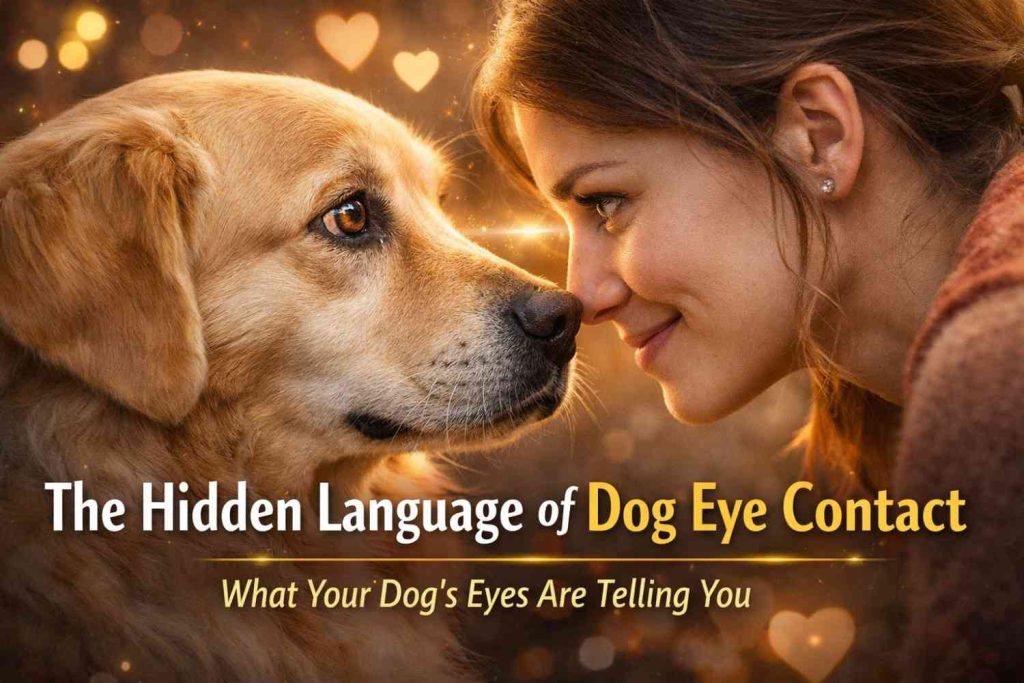
Have you ever caught your dog staring into your eyes and wondered what it means? Dog eye contact is more than just a cute moment—it’s a powerful form of communication. Dogs use their eyes to express emotions, build trust, and even signal discomfort or fear. Understanding this “hidden language” can strengthen your bond and help you respond better to your pet’s needs.
In this guide, we’ll break down the meaning behind dog eye contact, how to read different expressions, and what your dog is trying to tell you without making a sound.
🐶 Why Eye Contact Matters in Dogs
Eye contact plays a crucial role in how dogs communicate with humans and other animals. Unlike humans, who use verbal language, dogs rely heavily on body language—including their eyes—to share information.
When your dog looks at you, it could mean:
- They trust you
- They want something (food, attention, play)
- They are trying to understand your emotions
- They feel threatened or uncomfortable
Learning to interpret these signals can prevent misunderstandings and improve your dog’s emotional well-being.
👀 Types of Dog Eye Contact and Their Meanings
Not all eye contact is the same. The meaning depends on your dog’s body language, environment, and personality.
1. Soft, Relaxed Eye Contact 😌
This is the most positive type of eye contact. Your dog’s eyes will appear calm, with a relaxed face and possibly a wagging tail.
What it means:
- Love and trust
- Feeling safe and comfortable
- Bonding with you
Dogs often make this kind of eye contact during quiet moments, like when you’re petting them.
2. Prolonged Staring 👁️
A long, intense stare can have multiple meanings depending on the situation.
Possible reasons:
- They want food or attention
- They are waiting for a command
- They are focused on something
However, if the stare is stiff and paired with a tense body, it could signal dominance or aggression.
3. Avoiding Eye Contact 🙈
If your dog looks away or avoids your gaze, it’s not necessarily a bad thing.
What it means:
- Submission or respect
- Feeling anxious or unsure
- Trying to avoid conflict
Dogs often avoid eye contact to show they are not a threat. This is especially common with new people or unfamiliar environments.
4. “Whale Eye” (Showing the Whites) ⚠️
This happens when you can see the whites of your dog’s eyes clearly.
What it means:
- Stress or fear
- Feeling threatened
- Warning sign before aggression
If you notice this, give your dog space and identify what might be making them uncomfortable.
5. Slow Blinking 😍
Some dogs blink slowly when they are relaxed and content.
What it means:
- Calmness
- Trust
- Emotional connection
This is similar to how humans use soft eye contact to express affection.
❤️ The Science Behind Dog Eye Contact
Research has shown that when dogs and humans make eye contact, both experience an increase in oxytocin—the “love hormone.” This is the same hormone released between parents and babies.
This explains why eye contact with your dog can feel so emotional and bonding. It’s not just in your head—there’s real science behind it!
🐕 How Dogs Use Eye Contact with Humans vs Other Dogs
Dogs communicate differently with humans than they do with other dogs.
With Humans:
- Eye contact is often friendly and affectionate
- Used to seek attention or guidance
- Strengthens emotional bonding
With Other Dogs:
- Direct staring can be seen as a challenge
- Used to establish dominance
- Often avoided to prevent conflict
This is why your dog may happily stare at you but avoid eye contact with unfamiliar dogs.
⚠️ When Eye Contact Can Be a Warning Sign
While eye contact is usually positive, it can sometimes signal a problem.
Watch for these signs:
- Stiff body posture
- Growling or baring teeth
- Dilated pupils
- Frozen stance
If these are present, avoid direct eye contact and give your dog space. Forcing eye contact in such situations can escalate aggression.
🏡 How to Use Eye Contact to Strengthen Your Bond
You can use eye contact as a tool to build trust and improve communication with your dog.
Tips:
- Use soft eye contact during calm moments
- Pair eye contact with positive reinforcement (treats or praise)
- Avoid staring aggressively
- Blink slowly to signal calmness
- Respect your dog’s comfort level
Over time, your dog will associate your gaze with safety and love.
🐾 Common Mistakes Dog Owners Make
Even well-meaning owners can misinterpret eye contact.
Avoid these mistakes:
- Staring directly at a nervous or unfamiliar dog
- Ignoring other body language signals
- Assuming all eye contact is friendly
- Forcing interaction when your dog looks away
Understanding context is key to accurate interpretation.
🌟 Signs Your Dog Trusts You Through Eye Contact
Here are clear signs your dog feels safe with you:
- Maintains gentle eye contact
- Blinks slowly
- Relaxes their body around you
- Comes to you for reassurance
Trust takes time, but eye contact is one of the strongest indicators of a healthy bond.
🐶 Final Thoughts
Dog eye contact is a fascinating and meaningful way your pet communicates with you. From love and trust to stress and warning signals, your dog’s eyes reveal more than you might think.
By learning to read these subtle cues, you can:
- Build a stronger relationship
- Prevent behavioral issues
- Better understand your dog’s emotions
The next time your dog looks into your eyes, remember—it’s not just a glance. It’s a message.