Your dog’s gut health plays a major role in their overall well-being. From digestion to immunity and even mood, a healthy gut can make a huge difference in your furry friend’s life. If your dog often experiences issues like bloating, diarrhea, low energy, or poor appetite, their gut might need some attention.
The good news? You don’t always need medications. There are several natural ways to improve your dog’s gut health safely and effectively.
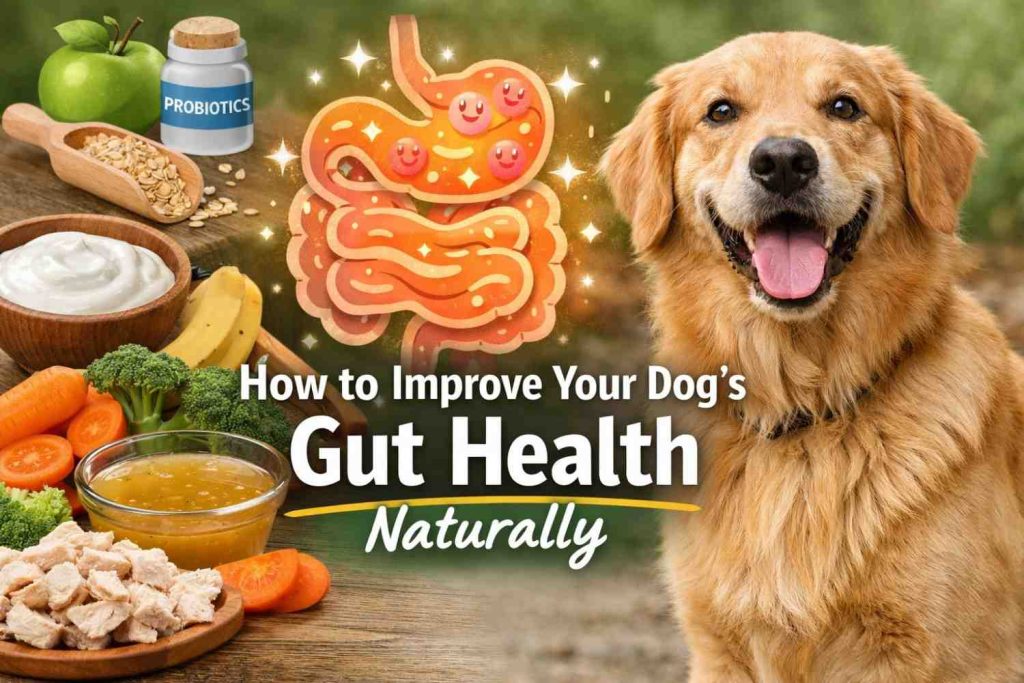
🐶 What Is Gut Health in Dogs?
Gut health refers to the balance of bacteria and microorganisms living in your dog’s digestive system. These bacteria, often called the gut microbiome, help break down food, absorb nutrients, and support the immune system.
When this balance is disturbed, it can lead to digestive problems and other health issues.
⚠️ Signs of Poor Gut Health in Dogs
Before improving gut health, it’s important to recognize the signs:
- Frequent diarrhea or constipation
- Excessive gas or bloating
- Bad breath
- Itchy skin or allergies
- Low energy levels
- Loss of appetite
- Vomiting occasionally
If you notice these symptoms regularly, your dog may have an unhealthy gut.
🌿 Natural Ways to Improve Your Dog’s Gut Health
1. Feed a Balanced, High-Quality Diet
Your dog’s diet is the foundation of gut health. Low-quality food with fillers and artificial ingredients can disrupt digestion.
Focus on:
- High-protein, real meat-based food
- Minimal additives and preservatives
- Easily digestible ingredients
You can also include fresh foods like boiled chicken, rice, and vegetables in moderation.
2. Add Natural Probiotics
Probiotics are “good bacteria” that help restore balance in your dog’s gut.
Natural probiotic sources include:
- Plain yogurt (unsweetened)
- Kefir
- Fermented vegetables (in small amounts)
These help improve digestion and boost immunity.
3. Include Prebiotic Foods
Prebiotics feed the good bacteria already present in your dog’s gut.
Examples:
- Bananas
- Pumpkin
- Sweet potatoes
- Apples (without seeds)
Adding these foods supports healthy digestion naturally.
4. Keep Your Dog Hydrated
Water is essential for digestion and nutrient absorption. Dehydration can lead to constipation and digestive discomfort.
Make sure:
- Fresh water is always available
- Your dog drinks enough, especially in hot weather
5. Avoid Overfeeding and Sudden Diet Changes
Overfeeding puts pressure on your dog’s digestive system. Sudden changes in diet can also upset gut balance.
Tips:
- Feed proper portion sizes
- Introduce new food gradually over 5–7 days
6. Reduce Stress and Anxiety
Stress can negatively affect your dog’s gut health, just like in humans.
Common stress triggers:
- Loud noises
- Separation anxiety
- Lack of routine
Help your dog by:
- Maintaining a consistent schedule
- Providing regular exercise
- Giving attention and comfort
7. Regular Exercise
Exercise improves digestion and helps maintain a healthy metabolism.
Daily activities like:
- Walking
- Playing fetch
- Light running
These keep your dog physically and mentally healthy.
8. Add Fiber to Their Diet
Fiber helps regulate bowel movements and supports gut bacteria.
Natural fiber sources:
- Pumpkin
- Carrots
- Green beans
- Oats
Make sure fiber is added in moderation to avoid digestive upset.
9. Limit Antibiotics and Processed Treats
Frequent use of antibiotics can kill both bad and good bacteria in your dog’s gut.
Also, processed treats with artificial ingredients can harm gut health.
Instead:
- Use natural treats
- Give medications only when prescribed by a vet
10. Try Bone Broth
Bone broth is rich in nutrients and helps soothe the digestive system.
Benefits:
- Supports gut lining
- Improves digestion
- Boosts hydration
You can add a small amount to your dog’s meals.
🥗 Sample Gut-Friendly Diet Plan for Dogs
Here’s a simple natural meal idea:
- Boiled chicken (protein)
- Cooked rice (easy digestion)
- Pumpkin (fiber)
- A spoon of yogurt (probiotic)
This combination supports a healthy gut while being gentle on the stomach.
🐕 When to See a Vet
While natural methods work well, some conditions require professional care.
Consult a vet if your dog has:
- Persistent diarrhea or vomiting
- Blood in stool
- Sudden weight loss
- Severe lethargy
Early diagnosis can prevent serious issues.
🌟 Final Thoughts
Improving your dog’s gut health naturally is one of the best things you can do for their overall well-being. With the right diet, natural probiotics, regular exercise, and proper care, your dog can enjoy a healthy digestive system and a happier life.
Small changes can make a big difference. Start by adjusting your dog’s diet and lifestyle, and you’ll soon notice positive results.