
A pet door sounds simple enough. Cut a hole, attach a flap, and your dog or cat comes and goes as they please. You get fewer interruptions, your pet gets more independence, and everyone’s happier. That’s the
pitch, anyway.
But here’s what most people don’t think about until after installation: that opening in your wall or door is a permanent access point. And unless you’ve done your homework, it can invite problems you didn’t sign up for — unwanted animals, energy loss, security vulnerabilities, even risks to small children.
None of this means you shouldn’t install a pet door. You absolutely should if it makes sense for your household. But going in informed makes the difference between a pet door you love and one you regret.
So let’s talk about what actually matters.
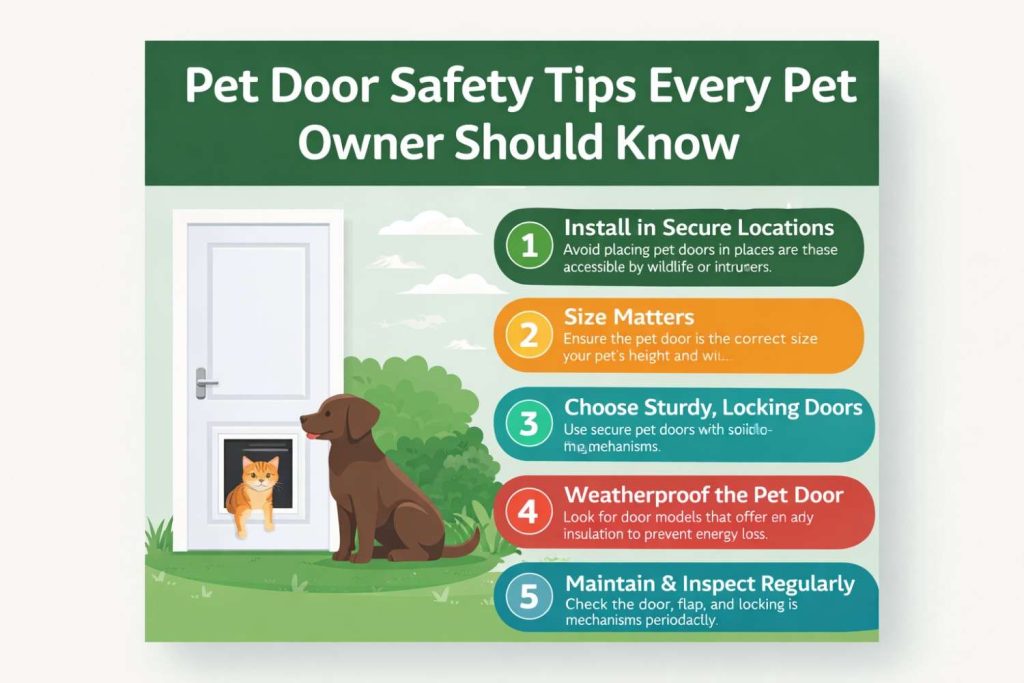
1. The Wildlife Problem Is Real
This is the concern that catches most new pet door owners off guard. You install a door for your golden retriever, and a week later there’s a raccoon in your kitchen at 2 AM.
It happens more than you’d think. Raccoons, opossums, stray cats, even snakes in certain regions — they’re opportunistic, and an unguarded pet door is basically an open invitation. If you live in a rural or
semi-rural area, this jumps from “possible” to “likely.”
The simplest flap-style doors offer zero resistance to wildlife. A raccoon can push through them just as easily as your Labrador can. This is where the type of door you choose really starts to matter, and
why doing some research into the best pet doors on the market is worth your time before you buy the cheapest option at a hardware store.
Electronic and microchip-activated doors solve this almost entirely. They only unlock when they detect your pet’s specific microchip or a collar sensor, so unless a raccoon happens to be wearing your cat’s
collar, it’s not getting in.
2. Child Safety: The Overlooked Concern
If you have toddlers or young children, a pet door needs some extra thought. Small kids are curious. A large-breed dog door is big enough for a two-year-old to crawl through, and they will try. Count on it.
This doesn’t mean you can’t have both kids and a pet door. It means you need to think about placement and locking. A pet door installed in a door that leads to a fenced backyard is a different risk profile
than one opening to an unfenced front yard or a pool area.
Locking panels are essential here. Every decent pet door should come with a solid cover or locking mechanism you can engage when you need the door sealed shut — during nap time, at night, or whenever you can’t actively supervise. If a pet door doesn’t include a reliable lock or cover panel, pass on it.
Some parents opt to install the pet door in an interior door leading to a secured mudroom or garage, adding a buffer zone between the child and the outdoors. It’s a smart approach if your home layout allows it.
3. Security: Can Someone Break In Through a Pet Door?
Short answer: it depends on the door. A cheap flap with no lock? Yes, that’s a potential entry point. Someone could reach through, or in the case of very large dog doors, physically fit through the opening.
But modern pet doors have come a long way on this front. Here’s what to look for:
Locking covers and security panels. A thick, rigid panel that slides over or snaps into the pet door opening and locks in place. This should be standard on any door you’re considering. Use it at night and
when you’re away from home.
Double-flap designs. Two flaps with an air gap between them make it significantly harder for anyone to reach through and manipulate a lock on your main door. They also help with insulation, which we’ll get to.
Electronic access control. Microchip-activated doors or those using collar keys only open for programmed pets. When the door isn’t being triggered by your pet, it stays locked. Hale Pet Door is one manufacturer that puts heavy emphasis on security and build quality — their doors are built with thick aluminum frames and solid locking mechanisms rather than the flimsy
plastic you see in big-box stores.
Placement matters too. Don’t install a pet door within arm’s reach of your main door’s lock or handle. That’s just common sense, but it’s surprising how often it gets overlooked.
4. Energy Efficiency and Insulation
Here’s a complaint you’ll hear from almost everyone who installs a bargain pet door: “My energy bill went up.” Or: “I can feel a draft coming through that thing.”
A pet door is a hole in your home’s envelope. If it’s poorly insulated, you’re essentially leaving a window cracked 24/7. In Phoenix summers or Minnesota winters, that adds up fast.
What separates a good pet door from a bad one on energy efficiency:
Weatherstripping quality. Cheap doors use thin magnetic strips that lose their seal within months. Better doors use industrial-grade weatherstripping and magnets that maintain a tight closure.
Double or triple flap systems. That air pocket between flaps acts as insulation, similar to double-pane windows. Single-flap doors are going to leak air. Period.
Frame insulation. The frame itself matters. Aluminum frames with thermal breaks outperform hollow plastic frames. A drafty frame undermines even the best flap.
Proper sizing. This connects directly to energy efficiency — an oversized door lets more air through than necessary.
5. Getting the Size Right
Bigger is not better when it comes to pet doors. You want the smallest opening your pet can comfortably use.
Measure your pet’s width at the widest point (usually the shoulders or chest) and their height from the bottom of their chest to the top of their shoulders. The door opening should be about an inch wider than
their widest point and tall enough that they don’t have to duck or squeeze.
The bottom of the pet door should sit at your pet’s belly height —roughly two inches off the ground for most dogs. Too high and they have to hop through awkwardly. Too low and you’re making the opening
larger than it needs to be.
If you have multiple pets of different sizes, size for the largest one. But be honest with yourself — if you have a Chihuahua and a Great Dane, you might need two separate doors rather than one enormous
opening.
6. Where You Install It Matters More Than You Think
Most people default to the back door. That works, but consider the full picture.
Wall installations tend to be more secure and energy-efficient than door installations because you can use a thicker, better-insulated tunnel. They also don’t weaken your exterior door.
Sliding glass door inserts are great for renters since they don’t require cutting into anything. They slide into your existing door track. The downside is they can reduce the opening width of your sliding door.
Garage or mudroom installations add a buffer zone. Your pet goes from inside to the garage or mudroom, then outside through a second exit. More steps, but better security and weather protection.
Think about what’s on the other side, too. A pet door opening to a fully fenced yard is ideal. Opening to an unfenced area near a busy road? That’s a safety concern for your pet regardless of the door quality.
7. Maintenance: Don’t Install and Forget
Pet doors need occasional attention. Not a lot, but some.
Check the flap and weatherstripping every few months. Flaps get stiff in cold weather and can warp in extreme heat. Weatherstripping compresses over time and may need replacing every couple of years.
Clean the tracks and frame. Dirt, pet hair, and debris build up and can prevent the door from sealing properly. A damp cloth and some mild soap every few weeks handles this.
If you have an electronic door, replace batteries on a schedule rather than waiting for them to die. A dead battery means a locked-out pet — or worse, a door stuck in the open position.
Lubricate hinges and moving parts once or twice a year. Silicone-based lubricant works well and won’t attract dirt the way WD-40 does.
Test the lock periodically. Slide the locking panel in and out, make sure it engages fully. A lock that’s hard to operate is a lock you won’t use.
The Bottom Line
A pet door is one of those home additions that dramatically improves daily life — for you and your pet. But the gap between a well-chosen, properly installed pet door and a cheap afterthought is enormous. One gives you convenience and peace of mind. The other gives you drafts, raccoons, and regret.