
Winter in many parts of the United States brings beautiful snowfalls, icy sidewalks, and freezing temperatures. While the season can be magical, it can also be harsh on your dog’s delicate paws. Snow, ice, and road salt can cause dryness, cracking, irritation, and even painful injuries.
If you’ve ever noticed your dog limping after a winter walk or constantly licking their paws, cold weather might be the reason. In this guide, you’ll learn exactly how to protect your dog’s paws from snow, ice, and salt — using simple, vet-recommended strategies that keep your furry friend safe and comfortable all winter long.
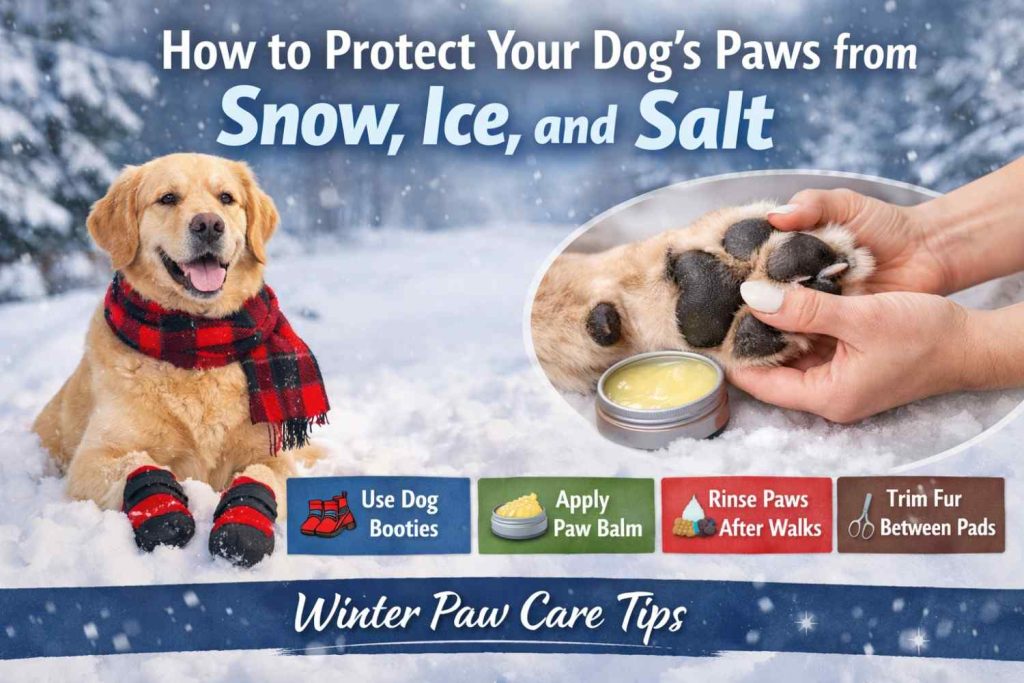
Why Snow, Ice, and Salt Are Dangerous for Dog Paws
Your dog’s paw pads are tough, but they aren’t invincible. Winter conditions create several risks:
1. Ice Burns and Frostbite
Extreme cold can cause frostbite on paw pads, especially during long walks. Ice crystals can damage skin tissue, leading to cracks and sores.
2. De-icing Salt Irritation
Most cities spread salt and chemical de-icers on roads and sidewalks. These chemicals can:
-
Cause chemical burns
-
Dry out paw pads
-
Trigger painful cracking
-
Lead to stomach upset if licked off
3. Ice Balls Between Toes
Snow can clump between your dog’s toes, forming hard ice balls that pull on fur and cause discomfort.
4. Dry, Cracked Paw Pads
Cold air and low humidity strip moisture from paw pads, making them rough and prone to bleeding.
Signs Your Dog’s Paws Are Damaged
Watch for these symptoms after winter walks:
-
Limping or favoring one paw
-
Excessive licking or chewing
-
Redness between toes
-
Cracked or bleeding pads
-
Whining while walking
-
Refusing to walk outdoors
If you notice severe swelling, bleeding, or persistent pain, consult your veterinarian immediately.
7 Proven Ways to Protect Your Dog’s Paws in Winter
1. Use Dog Booties
Dog booties are one of the best ways to protect paws from snow and salt. They create a barrier between your dog’s pads and harsh surfaces.
Benefits of dog boots:
-
Prevent chemical burns
-
Stop ice buildup
-
Keep paws warm
-
Reduce slipping
Choose waterproof, non-slip boots that fit snugly but not too tight.
Tip: Let your dog practice wearing them indoors first.
2. Apply Paw Balm Before Walks
Paw balms or paw wax create a protective shield over paw pads.
Look for products with:
-
Shea butter
-
Beeswax
-
Coconut oil
Apply balm 5–10 minutes before going outside. It helps prevent cracking and protects against salt irritation.
3. Trim Fur Between Paw Pads
Long fur between toes collects snow and forms ice balls.
Use grooming scissors carefully to trim excess fur around the pads. This reduces snow buildup and keeps paws cleaner.
4. Rinse Paws After Every Walk
This is one of the most important winter paw care habits.
After walks:
-
Rinse paws with lukewarm water.
-
Remove salt and debris.
-
Dry thoroughly with a towel.
Never skip this step — salt left on paws can cause irritation and chemical burns.
5. Avoid Heavily Salted Areas
Whenever possible:
-
Walk on grass instead of sidewalks
-
Avoid freshly salted roads
-
Choose pet-friendly trails
Some communities use pet-safe de-icers, but it’s always safer to rinse paws afterward.
6. Limit Outdoor Time in Extreme Cold
If temperatures drop below freezing (especially under 20°F), shorten walks. Small breeds, puppies, and senior dogs are more vulnerable to frostbite.
Watch your dog’s behavior — if they lift paws frequently or stop walking, it’s time to head indoors.
7. Keep Paw Pads Moisturized
Winter dryness can cause painful cracks.
Apply paw balm again at night to:
-
Restore moisture
-
Promote healing
-
Prevent further cracking
Consistency is key during cold months.
DIY Paw Protection: Is It Safe?
Some pet parents use coconut oil as a natural moisturizer. While it can help with mild dryness, it does not protect against salt chemicals like specialized paw balms do.
Avoid using:
-
Human lotions
-
Essential oils
-
Petroleum jelly in large amounts
Always use products specifically made for dogs.
Special Care for Different Dog Breeds
Small Dogs
Small breeds are closer to the ground and get colder faster. They benefit most from booties and sweaters.
Active Working Dogs
Dogs that spend more time outdoors need frequent paw checks and heavy-duty protection.
Senior Dogs
Older dogs have thinner skin and are more prone to cracks. Extra moisturizing is important.
How to Treat Mild Paw Damage
If your dog already has dry or cracked pads:
-
Clean the area gently.
-
Apply a dog-safe healing balm.
-
Keep them indoors for a day or two.
-
Prevent licking with a cone if needed.
If cracks are deep or bleeding continues, seek veterinary care.
Preventing Long-Term Winter Paw Problems
Good winter paw care is about consistency. Make these habits routine:
-
Inspect paws daily
-
Trim fur regularly
-
Moisturize weekly
-
Rinse after every outdoor walk
By staying proactive, you can prevent painful injuries before they start.
Final Thoughts
Winter walks don’t have to be painful for your dog. With the right protection — including dog booties, paw balm, proper grooming, and regular rinsing — you can keep your dog’s paws safe from snow, ice, and salt all season long.
Your dog relies on their paws for every adventure. A few extra minutes of care can make all the difference between discomfort and happy winter walks.