
Water is one of the most important things your dog needs every day. Just like humans, dogs depend on water to stay healthy, active, and full of energy. However, many pet owners are not sure how much water their dog should drink daily. Some dogs drink too little, while others drink more than normal, which can also be a sign of a problem.
Understanding the right amount of water for your dog helps prevent dehydration, overheating, and health issues. In this guide, you will learn how much water a dog should drink, what affects water needs, signs of dehydration, and when to worry about too much drinking.
Why Water Is Important for Dogs
Water plays a big role in your dog’s body. In fact, a dog’s body is made of more than 60% water. Because of this, even small changes in water intake can affect their health.
Water helps dogs:
-
Control body temperature
-
Digest food properly
-
Keep joints healthy
-
Carry nutrients through the body
-
Remove waste through urine
-
Keep skin and coat healthy
Without enough water, dogs can become weak, tired, and sick. Therefore, giving clean and fresh water every day is very important.
How Much Water Should a Dog Drink Per Day?
A simple rule most veterinarians use is:
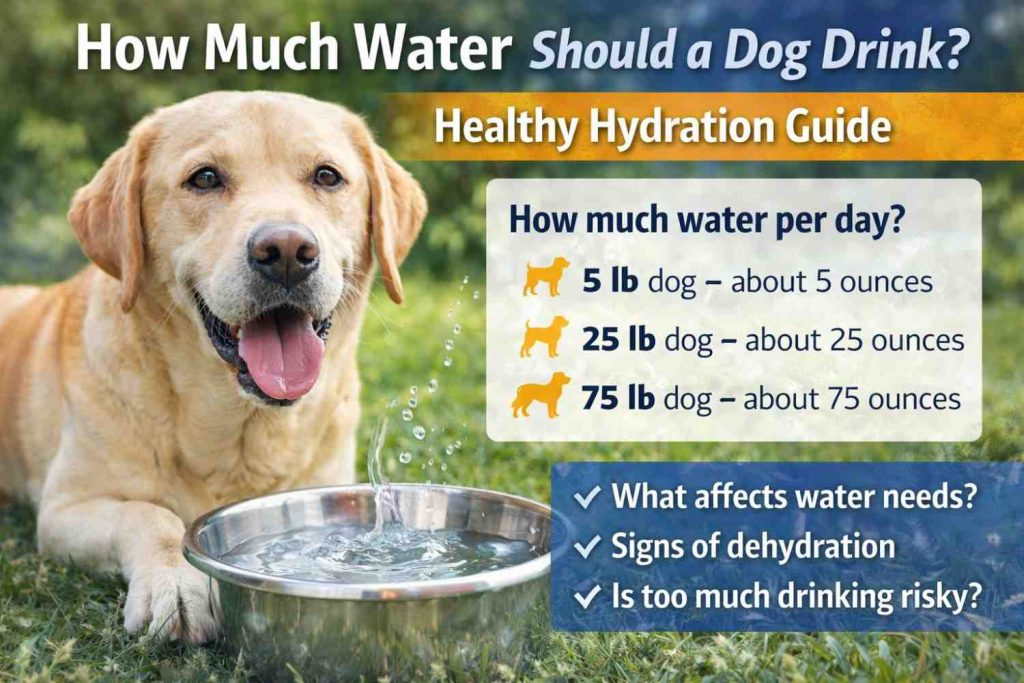
Dogs should drink about 1 ounce of water per pound of body weight each day.
This means:
-
5-pound dog → about 5 ounces of water
-
10-pound dog → about 10 ounces
-
25-pound dog → about 25 ounces
-
50-pound dog → about 50 ounces
-
75-pound dog → about 75 ounces
One cup of water equals about 8 ounces.
However, this is only an average. Some dogs may need more or less depending on their lifestyle and environment.
Factors That Affect How Much Water a Dog Needs
Not all dogs drink the same amount of water. Several things can change how much your dog should drink.
1. Dog Size and Weight
Large dogs need more water than small dogs because their bodies use more energy. For example, a big active dog may drink twice as much as a small indoor dog.
2. Weather and Temperature
Dogs drink more water in hot weather. During summer, dogs lose water through panting, so they need extra fluids.
In winter, dogs may drink less, but they still need fresh water every day.
3. Activity Level
Active dogs need more water than calm dogs. Running, playing, and training make dogs lose water faster.
After exercise, always give your dog fresh water.
4. Type of Food
Dogs that eat dry food usually drink more water. Dry kibble contains very little moisture.
Dogs that eat wet food may drink less because canned food already has water in it.
5. Age of the Dog
Puppies often drink more because they are growing. Older dogs may drink less, but sudden changes in drinking habits should be checked.
6. Health Condition
Some health problems make dogs drink more water than normal. For example:
-
Diabetes
-
Kidney disease
-
Fever
-
Infection
If your dog suddenly drinks too much, talk to a veterinarian.
Signs Your Dog Is Not Drinking Enough Water
Dogs cannot tell us when they are thirsty, so owners must watch for signs of dehydration.
Common signs include:
-
Dry nose or gums
-
Low energy
-
Sunken eyes
-
Thick saliva
-
Loss of appetite
-
Panting without exercise
You can also check by gently lifting the skin on the back of your dog’s neck. If the skin goes back slowly, your dog may be dehydrated.
Dehydration can become serious, so always give clean water.
Signs Your Dog Is Drinking Too Much Water
Drinking too much water can also be a warning sign.
Watch for:
-
Constant drinking
-
Frequent urination
-
Accidents in the house
-
Weight loss
-
Tiredness
Sometimes dogs drink more after exercise or in hot weather, which is normal. However, if the change happens suddenly, it may be a health problem.
Always check with a vet if you notice unusual drinking.
How to Make Sure Your Dog Drinks Enough Water
Some dogs do not drink enough water, especially in winter. Here are simple ways to help.
Keep Water Fresh
Change water at least once a day. Dogs prefer clean water.
Use a Clean Bowl
Wash the bowl daily to remove dirt and bacteria.
Keep Water in Different Places
Put bowls in different rooms so your dog can drink anytime.
Add Water to Food
You can mix a little water with dry food to increase water intake.
Use a pet fountain.
Many dogs like running water, so fountains help them drink more.
Tips for Hot Weather
In summer, dogs need extra care.
-
Give water after walks
-
Avoid long walks in heat
-
Provide shade outdoors
-
Carry water when traveling
Never leave a dog without water in hot weather.
Tips for Cold Weather
Many owners think dogs do not need much water in winter, but this is not true.
Indoor heating can make dogs thirsty. Also, dry air removes moisture from the body.
Make sure water does not freeze if your dog stays outside.
When to Call a Veterinarian
You should talk to a vet if:
-
Your dog refuses water for a day
-
Your dog drinks much more than normal
-
Your dog shows signs of dehydration
-
Your dog vomits after drinking
-
Your dog seems weak or sick
Early care can prevent serious health problems.
Final Thoughts
Water is just as important as food for your dog. Most dogs need about one ounce of water per pound of body weight each day, but this can change depending on weather, activity, food, and health.
By watching your dog’s drinking habits, you can quickly notice problems and keep your pet healthy. Always provide fresh water, check daily intake, and never ignore sudden changes.
A well-hydrated dog is a happy, active, and healthy companion.