
When a dog starts limping, struggling to stand, or avoiding playtime, many pet parents immediately worry about joint problems. Two of the most commonly confused conditions are dog arthritis and hip dysplasia. Although both affect mobility and cause discomfort, they are not the same—and understanding the difference is crucial for proper care.
In this guide, we’ll clearly explain dog arthritis vs hip dysplasia, including causes, symptoms, diagnosis, treatment options, and long-term outlook. By the end, you’ll know what signs to watch for and when to seek veterinary help.
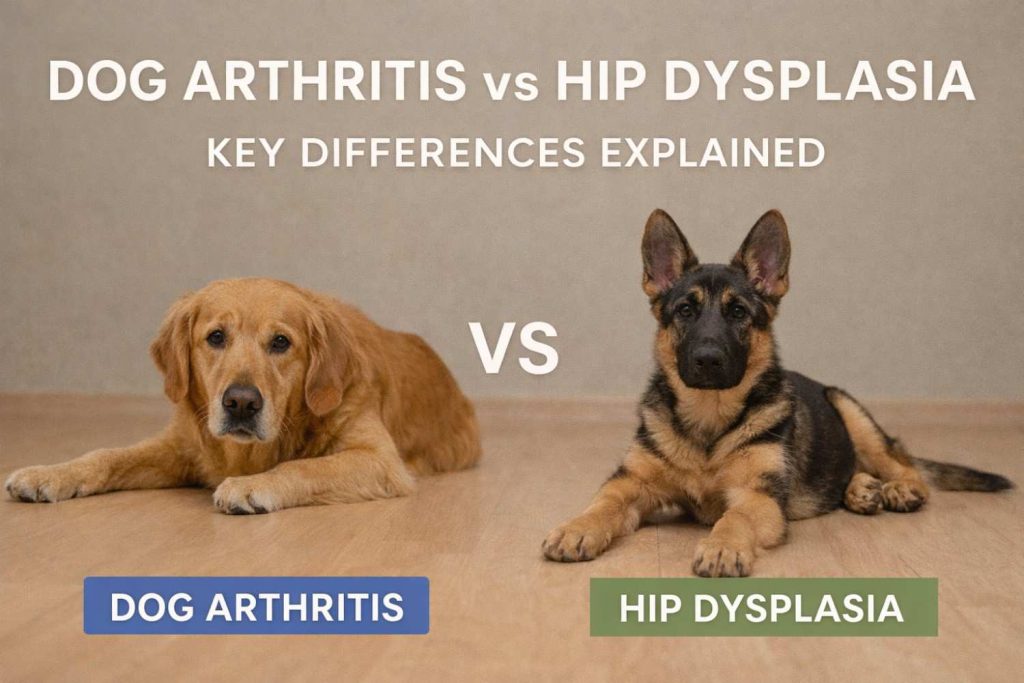
Understanding Joint Problems in Dogs
Joint issues can develop for many reasons, including genetics, age, injury, and lifestyle factors. Because dogs can’t tell us where it hurts, joint conditions often go unnoticed until symptoms interfere with daily life.
While arthritis and hip dysplasia may look similar on the surface, they affect the body differently and require distinct management approaches.
What Is Arthritis in Dogs?
Dog arthritis, medically known as osteoarthritis, is a degenerative joint condition. It occurs when the cartilage that cushions a joint gradually wears down. As a result, the bones rub against each other, leading to inflammation, stiffness, and ongoing discomfort.
Arthritis can affect any joint, including:
-
Hips
-
Knees
-
Elbows
-
Spine
-
Shoulders
Although arthritis is more common in senior dogs, it can also develop in younger dogs, especially after joint injuries or due to abnormal joint development.
Common Causes of Arthritis in Dogs
Arthritis usually develops over time, but several factors can increase the risk:
-
Natural aging
-
Previous joint injuries or surgeries
-
Repetitive stress on joints
-
Genetic predisposition
-
Higher body weight placing extra pressure on joints
Often, arthritis is secondary, meaning it develops as a result of another joint condition—including hip dysplasia.
What Is Hip Dysplasia in Dogs?
Hip dysplasia is a genetic orthopedic condition that affects how the hip joint forms. Instead of fitting smoothly into the hip socket, the ball and socket are loose or misaligned.
This poor fit causes joint instability, abnormal wear, and inflammation over time. Eventually, hip dysplasia often leads to arthritis, especially if left unmanaged.
Unlike arthritis, hip dysplasia is usually present from a young age, even if symptoms don’t appear right away.
Common Causes of Hip Dysplasia
Hip dysplasia is primarily inherited, but environmental factors can influence how severe it becomes. Common contributors include:
-
Genetic predisposition
-
Rapid growth during puppyhood
-
Excessive or improper exercise at a young age
-
Nutritional imbalances during development
Large and giant dog breeds are more commonly affected, but smaller breeds can develop hip dysplasia as well.
Dog Arthritis vs Hip Dysplasia: Key Differences
Although both conditions affect mobility, there are important differences between arthritis and hip dysplasia.
1. Age of Onset
One major difference is when symptoms appear.
-
Hip dysplasia often begins in puppies or young dogs, though signs may be subtle at first
-
Arthritis typically develops later in life as joints naturally wear down
However, a dog with hip dysplasia may not show obvious symptoms until arthritis develops in the affected joint.
2. Cause of the Condition
Another key distinction lies in what causes each condition.
-
Hip dysplasia is caused by abnormal joint development, mainly due to genetics
-
Arthritis results from cartilage breakdown due to aging, injury, or chronic joint stress
In many cases, hip dysplasia eventually leads to arthritis, but arthritis can also exist without hip dysplasia.
3. Joints Affected
Hip dysplasia affects only the hip joints, while arthritis can occur in any joint in the body.
If a dog shows pain or stiffness in multiple joints, arthritis is more likely. On the other hand, pain focused mainly in the hips may indicate hip dysplasia or arthritis secondary to it.
4. Type of Pain and Movement Changes
Dogs with hip dysplasia often show signs related to joint instability, such as:
-
Bunny hopping when running
-
Difficulty rising from the floor
-
Reduced hip range of motion
Dogs with arthritis usually experience:
-
Stiffness after rest
-
Gradual loss of mobility
-
Pain that worsens with activity
Although these signs can overlap, the movement patterns often differ.
Symptoms of Arthritis in Dogs
Arthritis symptoms usually progress slowly, which makes early detection challenging. Common signs include:
-
Stiffness after sleeping or resting
-
Limping or favoring a leg
-
Difficulty climbing stairs or jumping
-
Reduced interest in exercise
-
Behavioral changes such as irritability
Symptoms may worsen during cold or damp weather.
Symptoms of Hip Dysplasia in Dogs
Hip dysplasia symptoms can appear early or develop gradually. Common signs include:
-
Difficulty standing or sitting
-
Reduced activity or endurance
-
Swaying gait or bunny hopping
-
Hip pain when touched
-
Muscle loss in the hind legs
In mild cases, dogs may show little discomfort until arthritis develops later in life.
How Veterinarians Diagnose These Conditions
Proper diagnosis is essential because treatment strategies differ.
Physical Examination
Your veterinarian will evaluate:
-
Range of motion
-
Muscle strength
-
Pain response
-
Gait and posture
This initial assessment provides valuable clues.
Imaging Tests
X-rays are the most common diagnostic tool for both conditions.
-
Hip dysplasia is diagnosed by identifying abnormal hip joint structure
-
Arthritis is diagnosed by detecting cartilage loss, joint inflammation, and bone changes
Advanced imaging may be used in complex cases.
Treatment Options for Arthritis in Dogs
Arthritis cannot be cured, but it can be effectively managed with a long-term care plan.
Common treatment approaches include:
-
Pain-relief medications prescribed by a veterinarian
-
Joint-support supplements
-
Controlled, low-impact exercise
-
Physical therapy and rehabilitation
-
Comfortable bedding and home modifications
Early treatment helps slow disease progression and improves daily comfort.
Treatment Options for Hip Dysplasia in Dogs
Hip dysplasia treatment depends on severity, age, and lifestyle.
Non-Surgical Management
-
Activity modification
-
Physical therapy
-
Joint-support supplements
-
Pain management
Surgical Options
In severe cases, surgery may be recommended to improve joint function and reduce discomfort.
Your veterinarian will guide you toward the best option based on your dog’s needs.
Long-Term Outlook: Arthritis vs Hip Dysplasia
Both conditions require ongoing management, but many dogs live happy, fulfilling lives with proper care.
-
Dogs with arthritis often benefit from early intervention and consistent pain management
-
Dogs with hip dysplasia may require lifelong monitoring, especially if arthritis develops later
The key is early diagnosis and a tailored care plan.
How to Support a Dog With Joint Problems at Home
Regardless of the diagnosis, supportive care plays a major role in joint health.
Helpful strategies include:
-
Maintaining a healthy activity routine
-
Using ramps instead of stairs
-
Providing joint-friendly bedding
-
Keeping nails trimmed for better traction
-
Scheduling regular veterinary checkups
Small changes can make a big difference in daily comfort.
When Should You See a Vet?
If your dog shows:
-
Persistent limping
-
Difficulty standing or walking
-
Sudden changes in activity or behavior
-
Signs of pain during movement
It’s time to consult your veterinarian. Early evaluation leads to better outcomes and prevents unnecessary discomfort.
Final Thoughts
While dog arthritis and hip dysplasia share similar symptoms, they are distinct conditions with different causes and treatment paths. Hip dysplasia is a developmental issue often present from a young age, while arthritis is a degenerative condition that worsens over time.
Understanding the difference empowers you to make informed decisions and provide the best possible care. With early detection, proper treatment, and supportive home care, dogs with joint conditions can continue to enjoy a comfortable and active life.